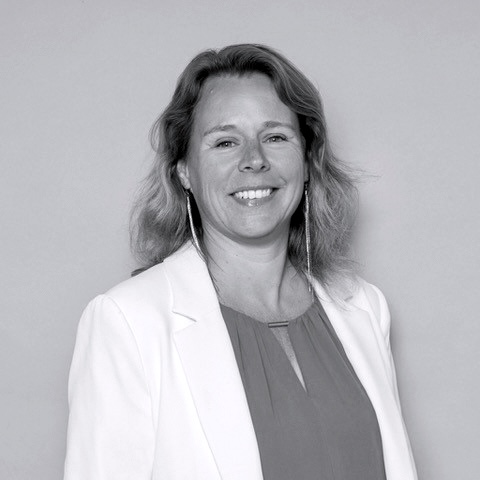
Last year, the first Social Entrepreneurship Course (LSO) took place at Nyenrode Business University. 'As a social entrepreneur, I do a lot on feeling,' says participant Mariska Komproe. 'The training confirms that I am doing well, on the right track. I feel stronger, more confident.
Mariska Komproe is the founder of Talentcoach. Talentcoach offers programs to companies that link the development of their professionals (human resources) to social issues (social responsibility for corporate). Mariska: 'As a social entrepreneur, you are sometimes a strange duck in the bite. You have an extra challenge; namely making money and creating social impact. That creates dilemmas and difficult choices that you have to make for your business. In addition, the outside world often has a wrong image of your organization. People think it's beautiful and cool, but don't see that it's hard work. It is nice that the training takes you seriously as a social entrepreneur and has an eye for that.
“As a social entrepreneur, you are sometimes a strange duck in the bite. You have an extra challenge; namely making money and creating social impact.”
Confirmation for entrepreneurs
'Sometimes you have to step out of your organization and make time to think: what am I doing? Is my organization going in the right direction? As an entrepreneur, there is not always someone who tells you what to do. With LSO we go through all facets such as financing, marketing, organization and impact measurement. It is the ideal checklist where I can tick my organization. It's immediately applicable, I like that.'
Inspiring speakers
During the training, various speakers from the business world will have their say. 'Kelly Liket, for example, talked about impact measurement. Does the social aspect of your business benefit society? We are not involved in the measurement ourselves, but the social impact is important to us. The information on how to choose legal forms for your company is also relevant to us, because we are looking at whether we can continue Talentcoach as a B.V.' Mariska drew the most inspiration from the stories of other entrepreneurs: 'Entrepreneurship is trial and error. We got a wonderfully recognizable look in the kitchen.'
“It is the ideal checklist where I can tick my organization. It's immediately applicable, I like that.”
Pitfalls of social entrepreneurs
'The weekend with the theme Rockefeller Habits was very interesting', says Mariska. During Rockefeller Habits, commercial entrepreneurs give advice on how to have a healthy financial organization. The most important tip? Invest in the right people. Mariska: 'I have had the pitfall of hiring people with a lot of passion for my order taking, but I don't know if they are the best for the position. You also have people who are very good at their work, but do not fit the core values of your organization. In the end, they cost so much energy that your top people resign with a passion for the business and the right qualities. In a small business like ours, it's a big problem if someone drops out. During Rockefeller Habits we were given tools and solutions to make choices easier.'
Profit is in network
'The profit of the training is mainly in the contact with other social entrepreneurs', says Mariska Komproe. 'Before I started LSO, I was about to quit Talent Coach. I no longer got satisfaction from the duties as director, I wanted to develop and tackle projects myself again. But now I walked on Thursday with questions from work, which I could ask the group on Friday morning during intervision. That was very nice. It is a safe setting where everyone dares to be vulnerable. As a result, you recognize a lot in each other and you also learn a lot from each other. Everyone is very open. Thanks to the theoretical lessons and the experiential interviews, I have gained the insight that I can set up the organization again so that Talentcoach fits me again and can steer it in a direction that makes me excited again. I felt like going on with my business again.'
“I felt like going on with my business again.”