The Social Entrepreneurship Course is for small and larger organizations. Most companies, large or small, often run into the same problems and questions and can learn from each other to take these thresholds.
Stichting Thuisgekookt
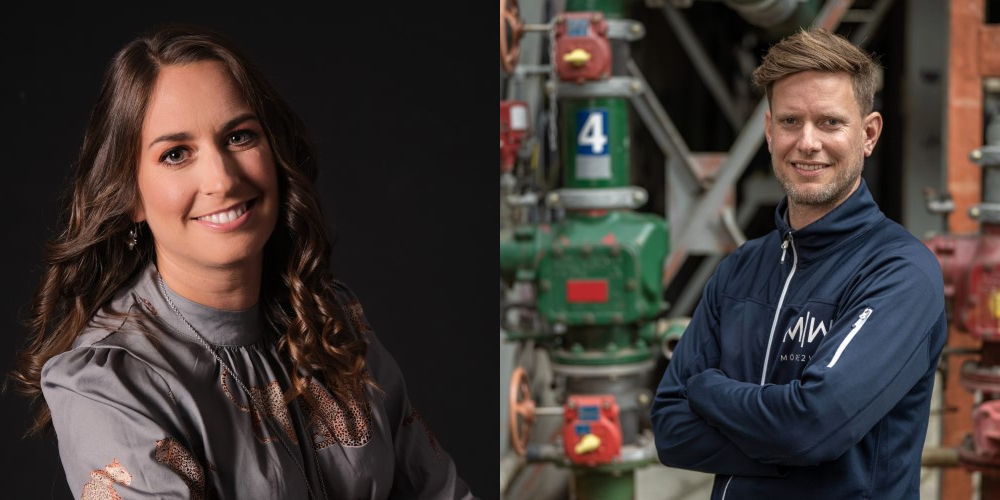
Stéphanie van Gerven is managing director of Stichting Thuisgekookt. 'Stichting Thuisgekookt has existed since 2012. We have grown rapidly in recent years. In 2020 we had four employees, in 2023 there will be 35. That rapid growth is great, but you can also lose sight of a few things. That's partly why I started the training. That, and I didn't always want to reinvent the wheel myself.'
Best practices
'There are already best practices, what works well and what doesn't have already been invented. During the training we get an overview of this, so that I can choose what suits our company well. In addition, a check-up of your company is pleasant. Because what works for four people does not always work for a group of 35 people. Due to the rapid growth, we lost sight of some things, simply because we didn't have time for it.'
"I would like to learn from fellow entrepreneurs and I am looking for tools to properly structure business growth."
Don't invent the wheel yourself
Michiel van Rijn van Alkemade, co-owner and director of More2Win joins in. 'Inventing the wheel yourself is fun, but it also takes time. Many people for you have already done it and there are people with whom you can figure things out together. That was one of the reasons for starting the training. In addition, I would like to learn from fellow entrepreneurs and I am looking for tools to properly structure business growth. Until recently, everything was more or less on gut feeling.
'In the past three years, we have gone from three people to eleven employees and our turnover has increased fivefold. Due to that growth, we encountered all kinds of thresholds and it turned out that we had no tools to clear them out of the way. In short, I want to go from deliberately incompetent to consciously competent to better support the organization. In the first weeks of the training, this scaling up methodology was already discussed. That was immediately a hit for me.'
Michiel continues: 'We belong to the slightly larger organizations within the companies in the training. In terms of experience and professionalization, the smaller organizations may be more attracted to this. In turn, I learn a lot about the diversity of other organizations and how they look at topics. This is how we all find our added value in each other.'
“I want to go from deliberately incompetent to consciously competent to better support the organization.”
A stable base
Stéphanie: 'You know that a good foundation is important. That means: writing down, working out and recording processes. Due to the rapid growth, there was never really time for that. The Process Management component was therefore a good lesson for us. Making processes more explicit and testing on both sides so that you apply structures in the organization: that gives the basis you need to continue to function well.'
Michiel: 'More2Win doesn't have to get bigger now. It must have a solid foundation, which allows for future growth.'
Organization and design
'Of course I didn't hear it for the first time,' Michiel continues, 'but structure and discipline are important values in an organization. I also see that in the training, and we learn about the methodology behind those two values. I have to honestly say that I have a bit of an aversion to discipline and structure, but realize well that you can't get under it. Leadership also has to do with that. You can't be good at everything. You have strengths and weaknesses. Then it is good that you learn to share in the responsibilities and tasks. You can't and don't have to do everything alone.”
"What do you need?" That's perhaps the most important question I've learned to ask,' says Stéphanie. 'He passed by in the first days of the training, and I now ask him almost every day. That question and the insight that came with that question has meant that we have written out our responsibilities much better, have made them concrete so that we can communicate about them more easily and everyone knows better where they stand.'
Long-lasting relationship
Stéphanie found the first few days surprising. 'We started with topics that mainly touched the personal level. Personal leadership, transactional analysis, business constellations. The first few days were quite exciting, with questions like 'what drives you and what stops you.' We went into depth, up to and including the youth. First we got to know each other as a person, which is good for creating a good group dynamic. You think along with each other as an unbiased person rather than as a company, which helps enormously with different topics. It was only weeks later that we really got to know each other's business.'
'Also nice is that we all work from the basis of social entrepreneurship, but within different sectors. There is no competition anywhere. From other courses I hear that long-term relationships often develop, not only as friendship but also as fellow entrepreneurs, to give each other advice and support.'
Michiel: 'This training has brought me a lot so far, and I look forward to learning to pitch. That is still fairly unexplored territory for our organization, but there are huge opportunities if our organization wants to develop it.' He concludes: 'Social entrepreneurs often have the fear of being financially and commercially successful. But 'earning model' is not a dirty word. I want to give that to all social entrepreneurs. It helps to make more social impact. And that is exactly the purpose of a company.'
"Long-term relationships often arise, from friendship, but also as fellow entrepreneurs, to advise and support each other."